
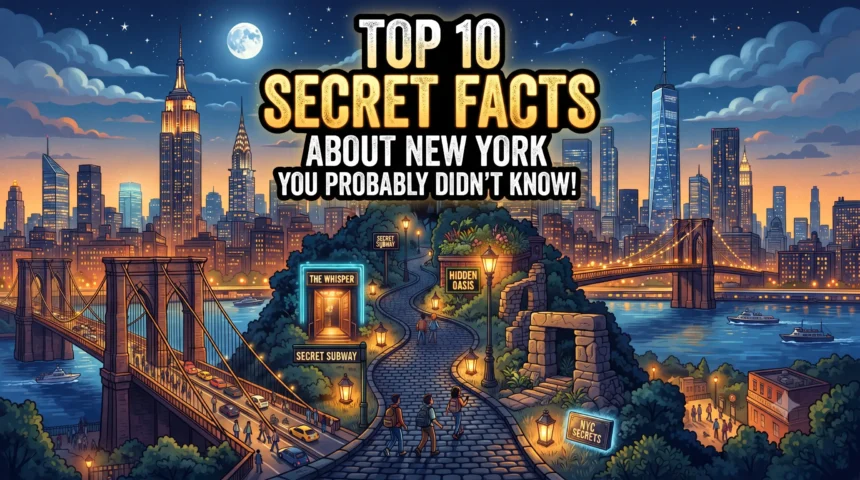
New York City is famous for its skyscrapers, yellow taxis, Broadway shows, Central Park, Times Square and the Statue of Liberty. But behind the city’s familiar attractions is another New York that many visitors never see.
Below the streets are abandoned subway spaces. Inside Central Park are traces of a community that existed long before the park itself. Roosevelt Island has the remains of a 19th-century hospital, while Lower Manhattan was once home to a large freshwater pond.
Some of New York’s most fascinating stories are not found in the city’s biggest tourist attractions. They are hidden in old buildings, forgotten neighborhoods, underground stations and even ordinary streets. Here are top 10 secret and hidden facts about New York City that reveal a very different side of the Big Apple.
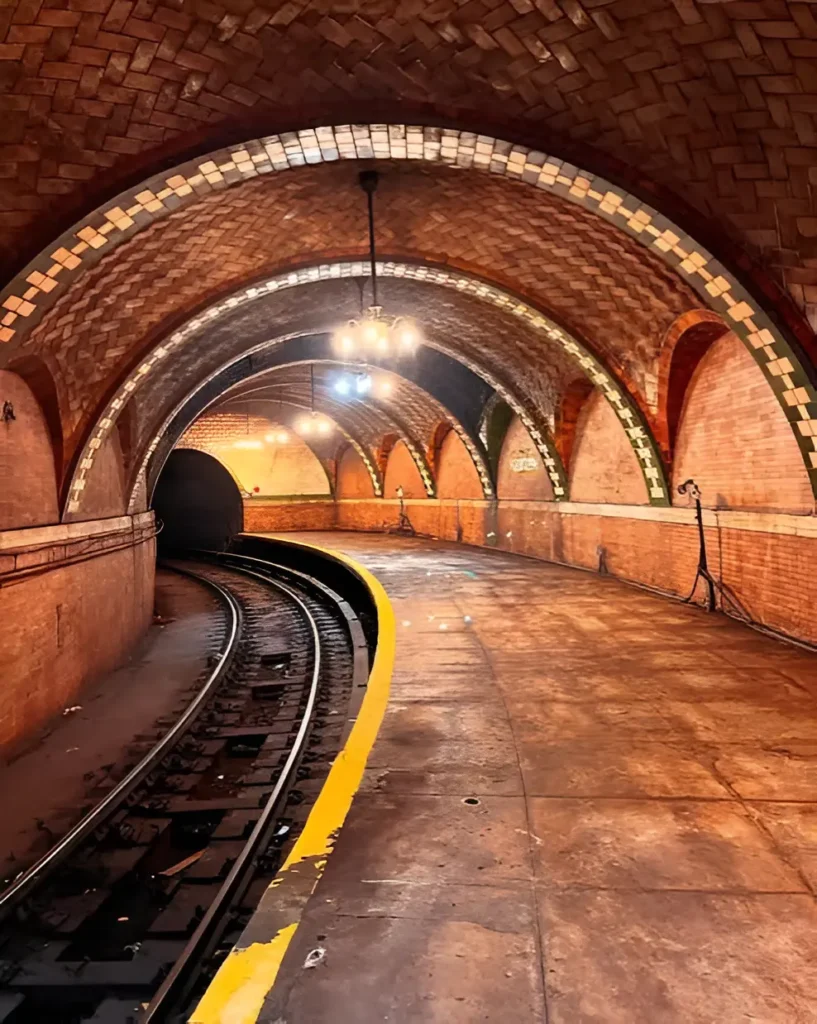
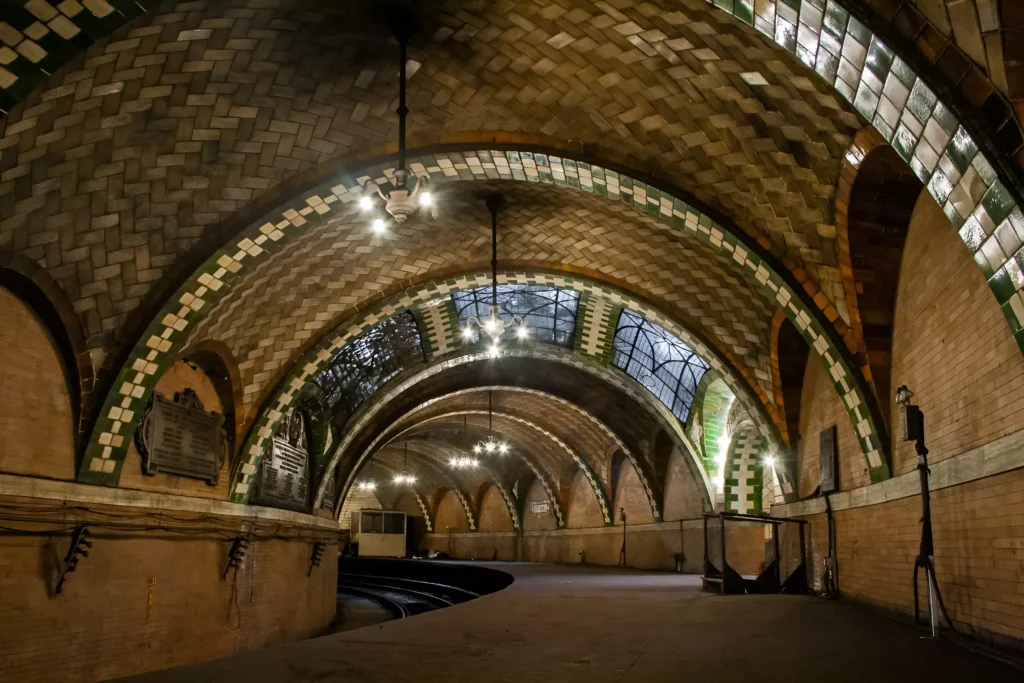
There Is an Abandoned Subway Station Hidden Under City Hall
One of the most fascinating secrets beneath New York City is the old City Hall subway station.
When New York’s first subway line opened in 1904, the City Hall station was designed to be much more elegant than the stations many New Yorkers know today. It featured curved ceilings, decorative tiles, skylights and architectural details that reflected the early New York’s subway system.
The station eventually became impractical for modern subway operations because its tight curve made it difficult to accommodate longer trains. It was closed to regular passenger service in 1945. Today, trains on the 6 line pass through the old station area, although passengers do not use it as a normal subway stop.
💡💁♂️ Even more interesting is the fact that many people traveling through Lower Manhattan have no idea that this historic space exists underneath them.
Central Park Was Once Home to an Entire Community
Central Park looks like one enormous piece of carefully planned green space today. But before the park was created, the land contained homes, churches, businesses and communities. One of the most important was Seneca Village, a predominantly African American community located in what is now Central Park.
The community was established in the 1820s and became the largest concentration of free African American property owners in New York City at the time. By the mid-1850s, it had at least 220 residents and included churches, a school, homes, gardens and orchards. Irish and German immigrants also lived there.
When New York City developed Central Park, Seneca Village was cleared through eminent domain. Its residents lost their homes and property, and the physical community disappeared from the landscape. Today, most people walking through Central Park would never guess that a neighborhood once stood there.
Hidden fact: Central Park is not simply a park built on empty land. Its landscape contains the history of communities that existed before the park.
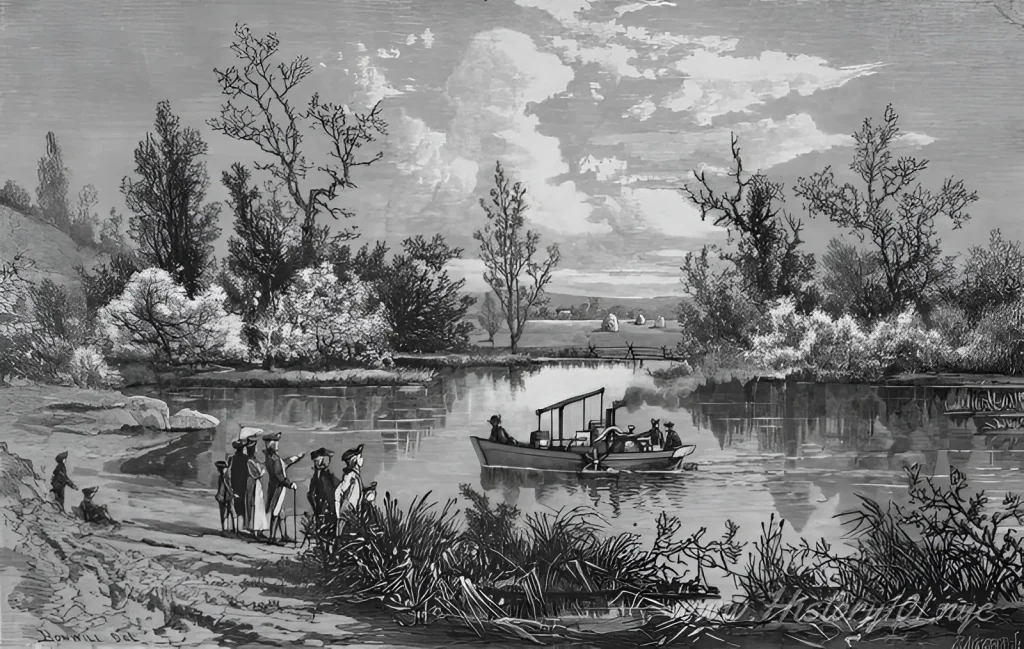
Manhattan Once Had a Large Freshwater Pond
It may be difficult to imagine New York City without its modern streets, skyscrapers and subway stations, but Lower Manhattan once had a major freshwater pond. It was called Collect Pond, a spring-fed body of water that covered roughly 48 acres. It was located in what is now the area around Chinatown and the Civic Center.
For early residents, the pond was an important source of freshwater. But as Manhattan grew, the area around the pond became increasingly polluted. Waste and industrial activity contaminated the water, creating serious public-health problems.
The city eventually drained the pond and filled the area. Today, there is no visible lake in Lower Manhattan to remind people that one once existed there. Instead, streets, buildings and busy neighborhoods occupy the former pond area. This is one of the best examples of how dramatically New York’s landscape has changed.
Imagine standing in Lower Manhattan today and trying to picture a large freshwater pond occupying the area around you.💁♂️
The Brooklyn Bridge Hides a Secret Cold War Bomb Shelter
Most people cross the Brooklyn Bridge to take stunning photos of the Manhattan skyline or enjoy a stroll over the East River. However, very few know that the bridge is secretly harboring Cold War history.
During a routine inspection in 2006, city workers stumbled upon a hidden room tucked away inside one of the massive masonry anchorage pillars. Inside, the space was fully stocked with emergency supplies left over from the 1950s and 1960s.
They discovered hundreds of sealed boxes of water, medical supplies, heavy wool blankets, and thousands of crackers stamped with expiration dates from the Cuban Missile Crisis era!
There’s a Secret Train Track Beneath the Waldorf Astoria
Deep beneath one of the city’s most luxurious hotels, the Waldorf Astoria, lies Track 61—a private, subterranean railway siding. Built to give VIP guests discreet, secure access to the hotel, the platform features its own private elevator that could lift an entire presidential limousine directly up into the hotel’s garage.
While rumors often swirl that Franklin D. Roosevelt used a special armored train here, it was primarily designed as an ultra-private transit route for high-profile diplomats, celebrities, and presidents looking to dodge the public eye.
New York Has an Entire Hidden World Beneath Its Streets
When most people think about New York, they imagine what is happening above ground. But beneath the city is another world of tunnels, pipes, subway infrastructure, abandoned spaces and forgotten structures. NYC Media’s Secrets of New York has explored this underground side of the city, including abandoned train stations, enormous water infrastructure and underground passageways.
The subway system itself has an extraordinary history. New York’s first subway service began in 1904, and the system expanded rapidly during the early 20th century. Over time, some stations and portions of infrastructure were closed, redesigned or left behind as the network evolved.
This means that the subway system isn’t just a way to get around New York. It is also a record of how the city developed. Some of the most interesting parts of New York’s underground history are places that ordinary passengers simply pass without realizing what they are seeing.
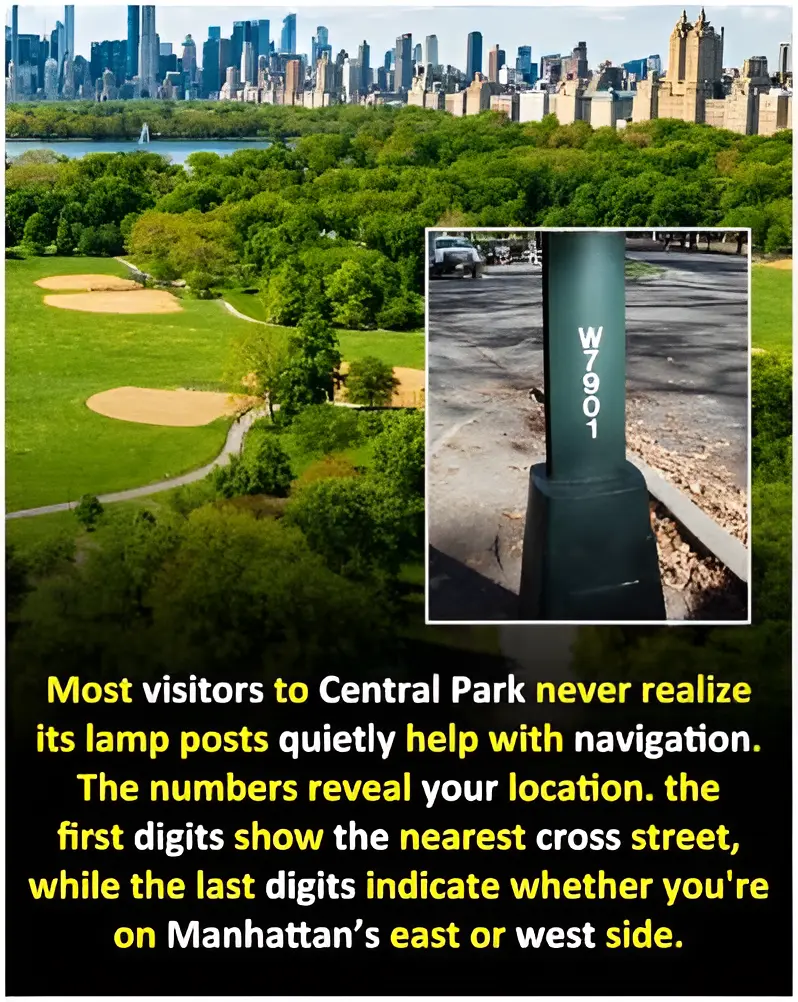
Central Park’s Lampposts Hold a Secret Navigation Code
If you ever find yourself lost in the winding, beautiful paths of Central Park, don’t panic—just look up at the nearest lamppost. Every single one of the thousands of cast-iron lampposts in the park features a hidden four-digit (or five-digit) code stamped into its base.
- The first few numbers tell you the closest cross street to your location.
- The final digit tells you whether you are closer to the East Side (even number) or the West Side (odd number) of the park.
The “Pizza Principle” Has Tracked NYC Inflation for Decades
New York is notorious for being expensive, but it also has one of the quirkiest unofficial economic indicators in the world: The Pizza Principle. First coined in the late 1970s, this unofficial economic rule states that the cost of a single plain slice of NYC pizza is nearly always equal to the price of a single subway ride.
Amazingly, through decades of inflation, recessions, and economic shifts, the price of a slice and a subway fare have tracked remarkably close to one another.
Also Read – if you can visit U.S. without a visa or not?
Central Park’s Famous “Sheep Meadow” Actually Had Sheep
When you lounge on the lush green grass of Central Park’s Sheep Meadow, you might assume the name is just poetic. Not quite! From 1864 until 1934, a flock of actual, living sheep grazed freely on that exact lawn.
They even had their own Victorian-style sheepfold (which still stands today and has been converted into the upscale restaurant, Tavern on the Green). The sheep were quietly relocated to Prospect Park (and eventually upstate) during the Great Depression out of fear that hungry citizens might try to eat them.
NYC Was Once Called “New Amsterdam” (And Bought for $24)
Before it became New York—named in 1664 after the Duke of York—the city was founded by Dutch colonists in 1624 as New Amsterdam. The heart of the settlement was located at the very southern tip of Manhattan (modern-day Financial District).
As the legendary (though slightly mythologized) story goes, Dutch colonial governor Peter Minuit “bought” Manhattan Island from the local Lenape people in 1626 for trade goods equivalent to roughly 60 guilders (famously calculated later as $24).
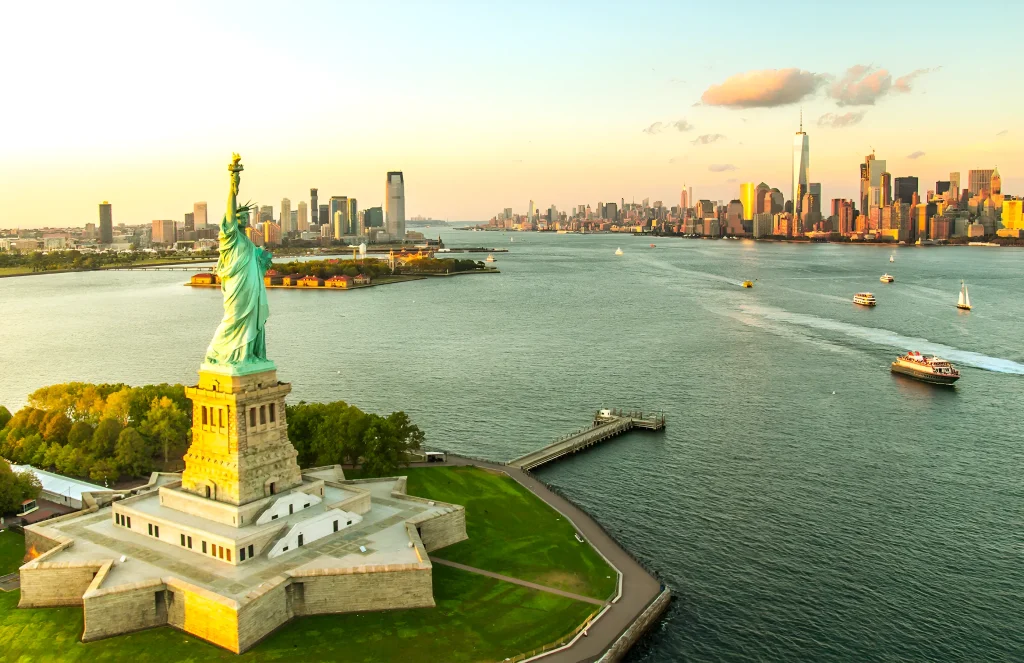
The Statue of Liberty Used to Be Shiny Brown
If you travel back in time to 1886, you wouldn’t recognize Lady Liberty. When France first gifted the iconic statue to the United States, it didn’t look like the weathered, iconic green we know today. Instead, it was a blindingly shiny, dark copper-brown color—the exact hue of a brand-new penny.
Over the next 30 years, exposure to rain, wind, and pollution caused the copper to oxidize, forming a protective patina layer that turned her bright green by around 1906.
There Are Remnants of the Berlin Wall in a Tiny Manhattan Park
You don’t have to travel to Germany to see history carved out of the Cold War. Tucked away in Paley Park—a tiny, pocket-sized urban oasis in Midtown Manhattan—are five original slabs of the Berlin Wall.
Covered in vibrant, colorful graffiti on the western side and stark concrete on the eastern side, these heavy slabs were installed in 1990 to commemorate the reunification of Germany and stand as a poignant historical artifact hidden right in the middle of the concrete jungle.

Why New York Has So Many Hidden Secrets
New York’s hidden history is largely a result of how quickly the city changed. Neighborhoods disappeared. Rivers and ponds were covered or drained. New subway stations replaced old ones. Communities were relocated. Buildings were demolished or transformed, while new skyscrapers appeared around them.
The city we see today is therefore built on top of several different versions of New York. The streets of Manhattan can tell stories about Dutch settlers, immigrant communities, African American landowners, musicians, engineers, entrepreneurs and millions of ordinary residents who helped shape the city.
That is what makes exploring New York so interesting. You don’t always have to visit a famous landmark to discover something remarkable. Sometimes the most fascinating history is sitting beneath your feet or hiding behind a building that you have walked past dozens of times.
What is the most interesting fact you read today here that you didn’t know? Tell us in the comment section!😉