
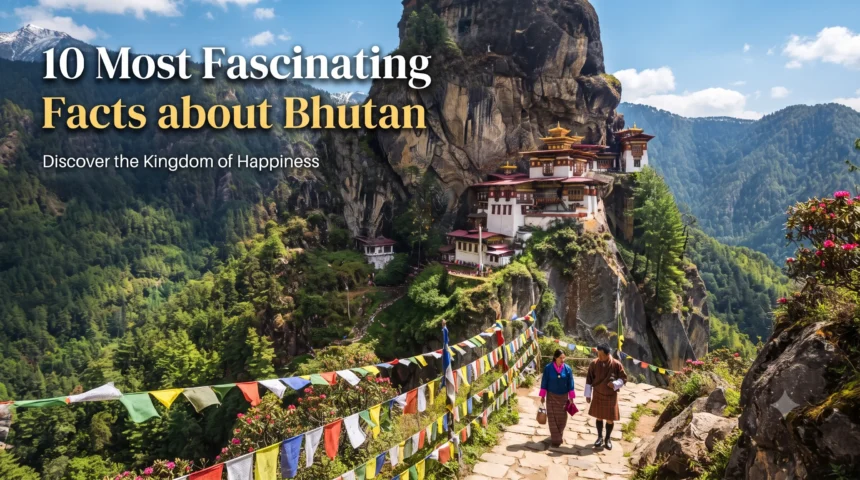
Nestled high in the Eastern Himalayas, Bhutan is one of the world’s most fascinating and unique countries. Known for its dramatic mountain landscapes, ancient monasteries, colorful festivals, and peaceful way of life, this small Himalayan kingdom feels remarkably different from any other countries in the world.
Bhutan is officially known as the Kingdom of Bhutan. The country sits between India and China and is much popular for it’s traditions, culture and unique natural environment. So, whether you are planning to visit the country or just curious about Bhutan, here are 10 most fascinating facts about Bhutan you should know.
Bhutan Is One of the World’s Happiest Countries — But That’s Not the Whole Story
One of the first things people often associate with Bhutan is Gross National Happiness (GNH). Unlike the traditional idea of measuring a country’s development primarily through economic indicators such as GDP, Bhutan has promoted the idea that a nation’s progress should also consider the wellbeing of its people.
The concept of Gross National Happiness was famously promoted by Bhutan’s leadership in the 1970s. It considers areas such as psychological wellbeing, health, education, cultural diversity, good governance, community vitality, environmental conservation, and living standards.
This doesn’t mean that every person in Bhutan is automatically happy. Rather, GNH represents a broader philosophy about how a country should measure progress. The idea has attracted international attention and has helped make Bhutan one of the world’s most distinctive examples of an alternative approach to development.
Bhutan Is the Only Carbon-Negative Country in the World
Bhutan is exceptionally environmentally conscious, and its forests play a major role in protecting the country’s right environment. A huge proportion of Bhutan’s territory is covered by forests, which absorb more carbon dioxide than the country produces. As a result, Bhutan is widely recognized as the world’s only carbon-negative country.
The country’s constitution also requires at least 60% of its total land area to remain under forest cover for all time. This commitment is particularly remarkable considering Bhutan’s mountainous terrain and relatively small size.
From protected forests and wildlife conservation to hydropower and environmental policies, Bhutan has made conservation an important part of its national development strategy and uniquely linked to their growth.
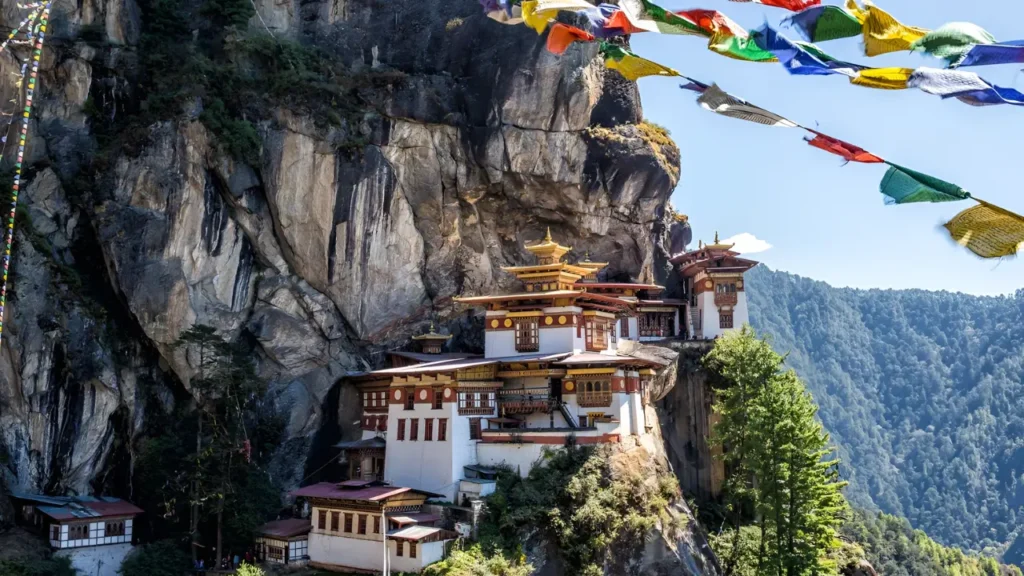
Bhutan Is Home to the Famous Tiger’s Nest Monastery
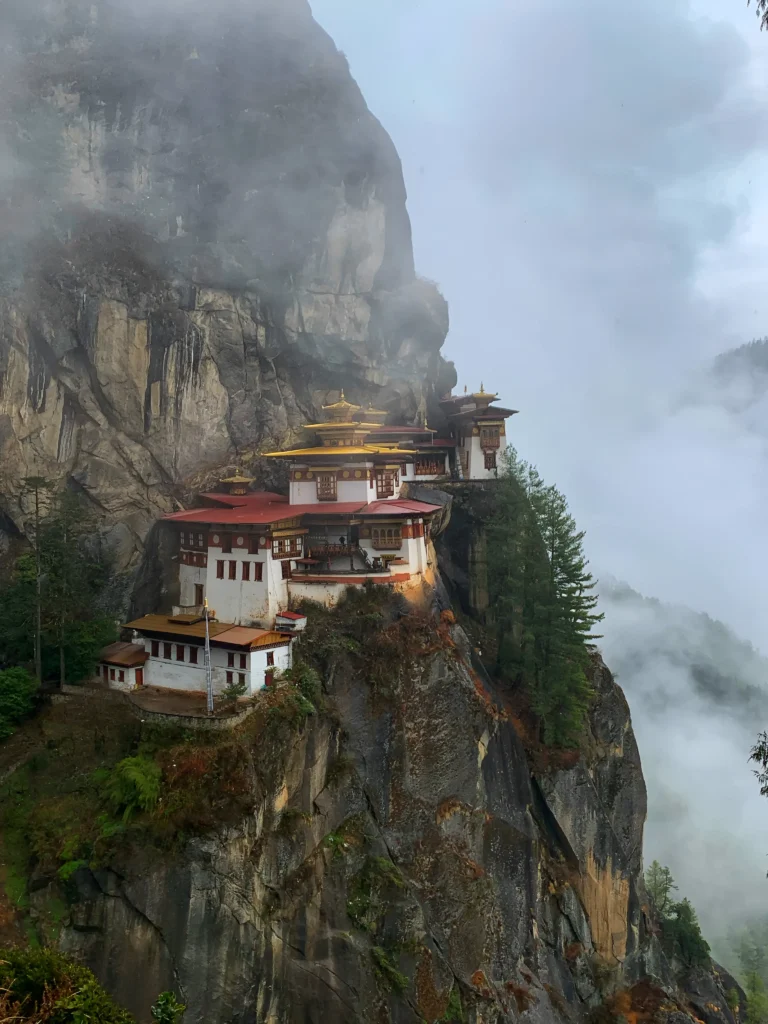
One of Bhutan’s most recognizable landmarks is Paro Taktsang, better known as Tiger’s Nest Monastery. Perched dramatically on the side of a cliff above the Paro Valley, the monastery is one of the country’s most iconic cultural and religious sites.
According to Bhutanese tradition, the sacred site is associated with Guru Padmasambhava, also known as Guru Rinpoche, who is believed to have arrived at the location on the back of a flying tiger. The monastery complex was constructed in the late 17th century and has become an important pilgrimage destination.
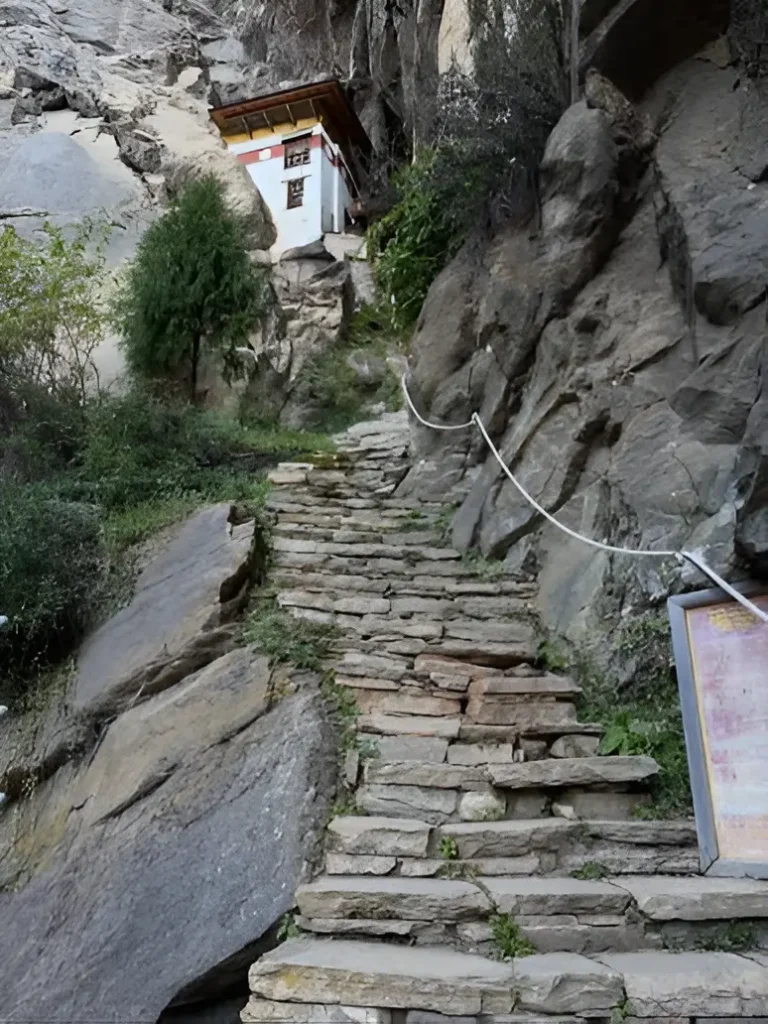
Getting there is an experience in itself. You have to hike through forests and steep mountain paths before reaching the monastery. The spectacular setting is one of the reasons Tiger’s Nest has become a must-visit attraction for travelers exploring Bhutan.
Bhutan Has No Coastline — and Its Mountains Define the Country
Bhutan is a landlocked Himalayan country located between India and China. Its geography is dominated by mountains, deep valleys, forests, and fast-flowing rivers. The landscape changes dramatically as you travel from the lower southern regions toward the high Himalayan areas in the north.
The northern part of Bhutan contains some of the country’s highest and most rugged mountain landscapes. The country’s geography has also played an important role in preserving its culture and historical traditions. For centuries, the difficult terrain made travel between communities challenging, helping many local traditions develop and survive.
Today, those mountains are one of Bhutan’s biggest attractions for hikers, photographers, nature lovers, and adventure travelers.
Also read – 10 Things to Do in World’s Smallest Country Vatican City
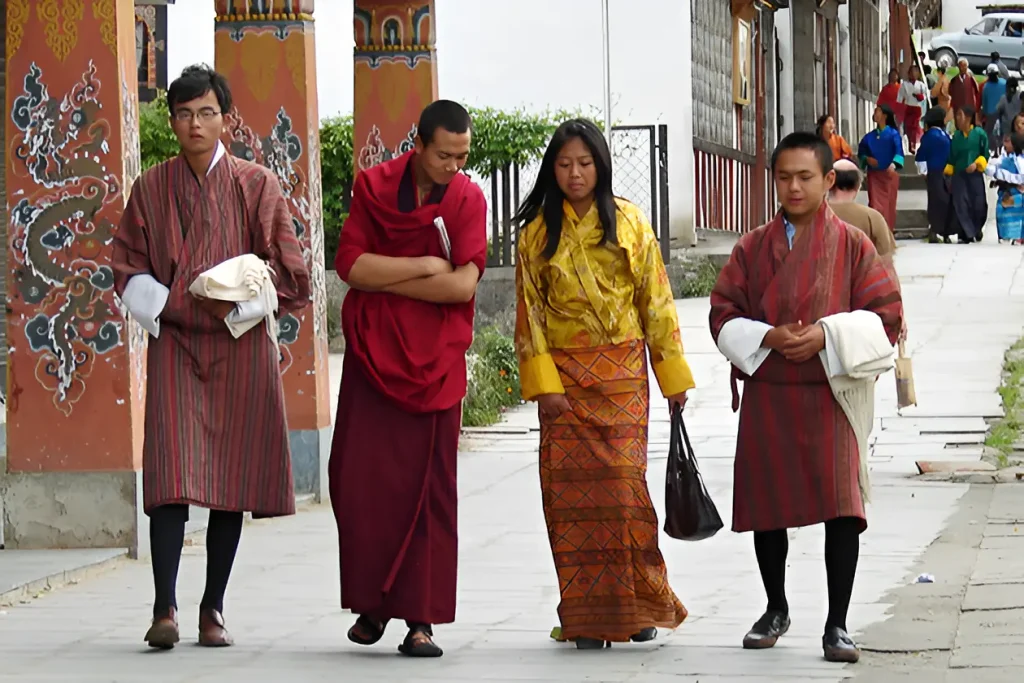
Bhutan Has a Unique National Dress Tradition
Walk through a Bhutanese town or attend a government function, and you’ll notice something very distinctive: everyone is their traditional clothing, traditional clothing remains an important part of everyday life of a Bhutanese.
The traditional men’s garment is called a gho, while women traditionally wear a kira. These garments are strongly connected with Bhutanese culture and national identity.
Traditional clothing is particularly visible in schools, government offices, religious ceremonies, and official events. Bhutan’s cultural policies have helped preserve traditional dress and other aspects of the country’s heritage. Learn more about Bhutan from a local.
Bhutan Is Famous for Its Colorful Festivals
Bhutan’s religious festivals, known as tshechus, are among the most spectacular cultural events in the country.
During these festivals, communities gather at monasteries and dzongs to watch traditional dances, music, rituals, and elaborate masked performances. The dancers often wear brightly colored costumes and large masks representing different religious figures and themes.
The festivals aren’t simply tourist attractions. They have deep religious and cultural significance for local communities and provide an opportunity for families and communities to come together.
For visitors, attending a Bhutanese festival can be one of the most memorable experiences of a trip because it offers a glimpse into traditions that have been preserved for generations.
No Traffic Lights in the Capital
One of the most fascinating facts about Thimphu, Bhutan’s capital, is that it has no traffic lights. Instead, traffic at busy intersections is directed manually by traffic police using hand signals.
Bhutan once experimented with traffic lights, but they were later removed, making Thimphu one of the few capital cities where you can still see officers personally managing traffic. For visitors, this unusual system is a charming reminder of the city’s relatively calm and traditional character.
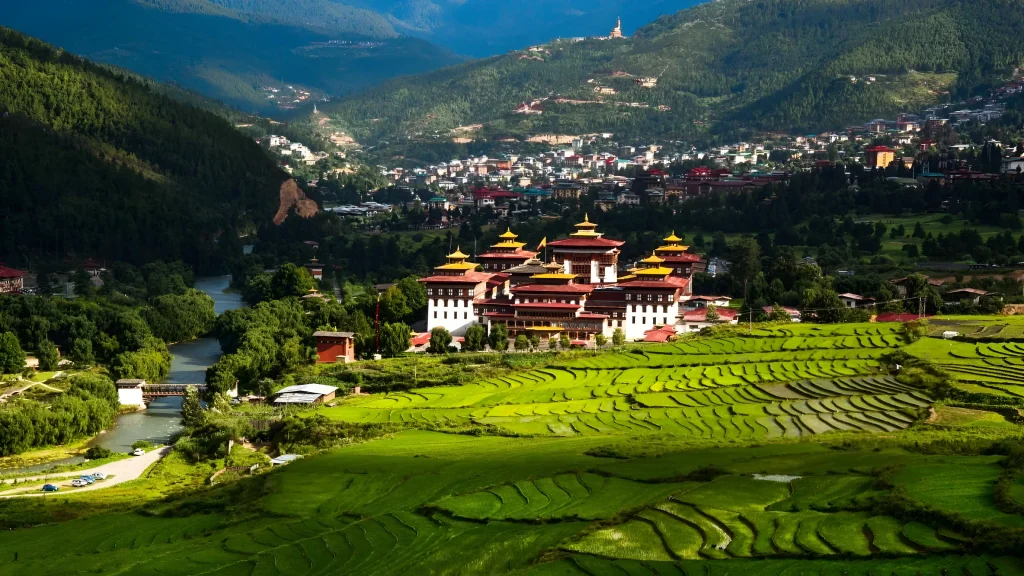
Bhutan Is One of the World’s Most Unique Travel Destinations
Perhaps the most fascinating fact about Bhutan is that the country has deliberately taken a different approach to tourism. Bhutan has historically followed a policy of high-value, low-volume tourism, seeking to attract visitors while minimizing the negative effects of mass tourism on its environment and culture.
This approach means that traveling to Bhutan can feel quite different from visiting heavily touristed destinations elsewhere in Asia.
Instead of enormous crowds and large-scale tourism infrastructure dominating the landscape, visitors can experience ancient monasteries, mountain valleys, traditional villages, Buddhist temples, forests, and cultural festivals.
Also read – Best Places to Hangout in Kolkata
Plastic Bags Are Banned
Long before global plastic bans became mainstream, Bhutan banned the import, sale, and use of plastic bags in 1999. Visitors and locals alike rely on traditional woven baskets and cloth bags, keeping the pristine Himalayan trails and valleys remarkably free of plastic litter.
National Unity Through the Mythical Thunder Dragon
Bhutan is locally known as Druk Yul, meaning the “Land of the Thunder Dragon.” The word Druk refers to the thunder dragon, a powerful symbol deeply connected with Bhutanese culture and identity.
According to Bhutanese tradition, the thunder heard rumbling across the Himalayan mountains is associated with the roar of the dragon. The mythical Druk is also featured prominently on Bhutan’s national flag, symbolizing the country’s strength, unity, and spiritual heritage.
The thunder dragon is so closely connected to Bhutan that the country’s people are sometimes referred to as Drukpa, meaning “people of the Druk.”

Frequently Asked Questions About Bhutan
The followings are the questions people generally ask when they listen about Bhutan. So, I summarized everything and answered a list of questions below.
What is Bhutan famous for?
Bhutan is famous for its Himalayan landscapes, Buddhist monasteries, Tiger’s Nest Monastery, Gross National Happiness philosophy, traditional architecture, colorful festivals, and strong environmental conservation policies.
Why is Bhutan called the happiest country?
Bhutan is associated with happiness because of its Gross National Happiness philosophy, which considers wellbeing, cultural preservation, environmental conservation, governance, and living standards alongside economic development.
Is Bhutan carbon negative?
Yes. Bhutan is widely recognized as the world’s only carbon-negative country because its forests absorb more carbon dioxide than the country produces.
What is Bhutan’s most famous tourist attraction?
Tiger’s Nest Monastery, or Paro Taktsang, is arguably Bhutan’s most famous attraction. The monastery is dramatically positioned on a cliff above the Paro Valley.